
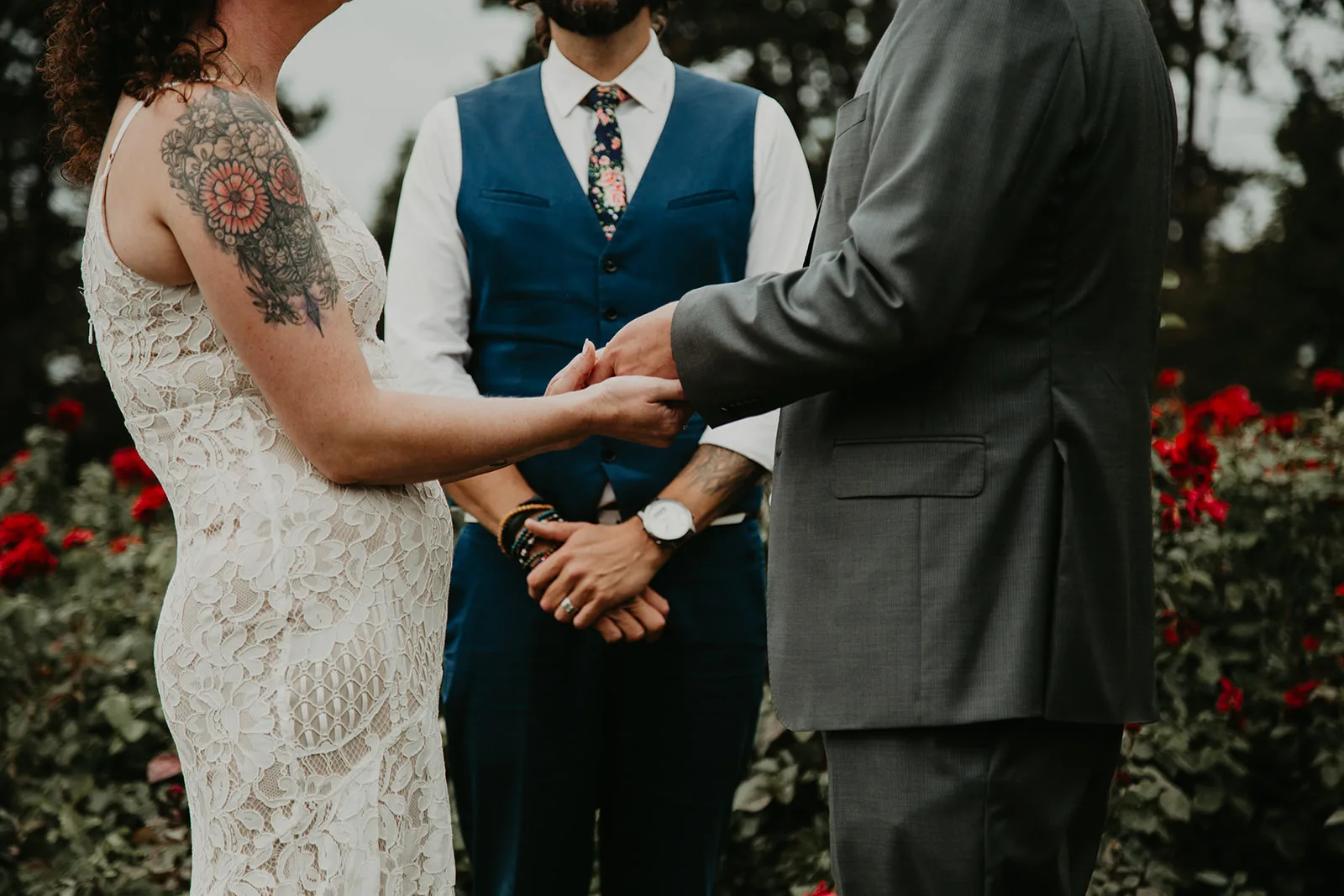
A wedding officiant leads a couple through their marriage ceremony, helping them exchange vows, celebrate their commitment, and complete the legal steps required for marriage when authorized to do so. Their responsibilities may also include planning the ceremony, selecting readings, writing meaningful introductions, and guiding the couple through the day itself.
Some couples prefer a traditional religious wedding. Others want something secular, interfaith, or completely personal. There is room for all of these approaches.
When looking for officiants for wedding ceremony planning, it helps to understand what they actually do. Knowing their responsibilities makes it easier to find someone who respects your relationship and understands the kind of wedding you have in mind.
What Are the Main Responsibilities of a Wedding Officiant?
A wedding officiant is the person responsible for conducting a marriage ceremony. Depending on their qualifications and the laws where the wedding takes place, they may also be authorized to solemnize the marriage legally.
But the job involves more than standing in front of guests and asking two people to say, “I do.”
A good officiant takes time to understand the couple, prepares the ceremony, and makes sure everyone knows what to expect. Some are closely involved in planning, while others focus primarily on conducting the ceremony.
Helping Couples Plan Their Ceremony
Most couples have a general idea of how they want their wedding to feel. Turning that idea into an actual ceremony can be harder.
An officiant may begin with a conversation about the relationship, family traditions, religious preferences, and anything the couple would rather leave out.
For example, one couple might want a short outdoor ceremony with personal vows. Another may prefer religious readings and family blessings. Neither approach is more meaningful than the other.
The officiant’s responsibility is to understand those preferences and help organize the ceremony around them.
Writing or Personalizing the Ceremony
A wedding ceremony doesn’t have to follow a script that could belong to any couple.
Some officiants help write introductions, suggest readings, or include details about how the couple met. Others offer a ceremony structure that couples can adapt.
Personal touches don’t need to be elaborate. A favourite poem, a few words about a shared experience, or a family tradition can make the ceremony feel familiar and genuine.
Couples incorporating Hawaiian customs may also explore meaningful traditions such as the lei exchange and hoʻokupu when planning their ceremony.
Couples should ask how much input they’ll have in the wording. Some want to approve every line. Others prefer to share their ideas and leave the writing to the officiant.
Leading the Wedding Ceremony
On the wedding day, the officiant guides everyone through the ceremony.
A typical ceremony begins with a welcome and a few opening remarks. It may then include readings, a reflection on marriage, the exchange of vows, and the giving of rings.
The officiant guides the couple through these moments, including the declaration of marriage when appropriate, before closing the ceremony and introducing the newly married couple.
Not every wedding includes rings, readings, or traditional vows. These are choices, not universal requirements.
An attentive officiant also knows when to pause, how to manage unexpected interruptions, and how to help a nervous couple feel comfortable.
Handling Marriage Legalities
This is one responsibility couples should never assume is automatically included.
In many jurisdictions, an authorized officiant can legally solemnize a marriage and complete or submit the required marriage documents. However, the rules differ between states, countries, and sometimes individual localities.
Marriage licenses, witness requirements, officiant authorization, and filing deadlines can all vary.
Before booking, confirm that your officiant is legally permitted to perform marriages in the location you’ve chosen. Also check who is responsible for obtaining the license and returning the completed paperwork.
What Happens Before, During, and After a Wedding Ceremony?
An officiant’s involvement usually extends beyond the ceremony itself, although the exact services depend on the person you hire.
Before the wedding, couples may have an initial consultation, discuss their ceremony preferences, review a draft, and coordinate practical details. Some officiants attend rehearsals or communicate with wedding planners, depending on the agreement.
During the ceremony, the officiant leads the proceedings. They help the couple move from one part of the ceremony to the next and make sure the exchange of vows and other planned moments happen in the intended order.
After the wedding, an authorized officiant may sign and return marriage documents, where required. Some also provide agreed-upon follow-up assistance.
These details are worth discussing beforehand. A short ceremony package may include different services from one involving several planning meetings and a rehearsal.
What Is the Difference Between a Religious, Secular, and Interfaith Wedding Officiant?
Not every couple approaches marriage through the same beliefs or traditions. The type of officiant you choose should reflect that.
Religious Wedding Officiants
Religious officiants conduct ceremonies shaped by a particular faith. They may be ministers, priests, rabbis, imams, or other recognized religious leaders.
The ceremony might include prayers, scripture, blessings, or established marriage traditions.
Some religious institutions have specific requirements regarding ceremony locations, premarital preparation, or the wording used during marriage rites. Couples should discuss these expectations early.
Secular Wedding Officiants
A secular wedding focuses on the couple’s commitment without requiring religious elements.
Instead of prayers or scripture, the ceremony might include personal vows, meaningful readings, music, or reflections on the relationship.
Secular doesn’t mean impersonal. A ceremony can be deeply emotional without following a religious tradition.
For couples who don’t identify with a particular faith, this approach often allows them to express their commitment in language that feels comfortable.
Interfaith Wedding Officiants
When two people come from different religious backgrounds, planning a ceremony may involve conversations about traditions, family expectations, and personal beliefs.
An interfaith wedding officiant helps couples explore ways to acknowledge those differences respectfully.
For instance, one partner may want a reading from their religious tradition, while the other prefers a secular reflection. Some couples include blessings from both backgrounds. Others choose a ceremony that emphasizes shared values without formal religious rituals.
An interfaith minister may also conduct ceremonies that draw on multiple faith traditions, depending on their practices and the couple’s wishes.
The important thing is that neither partner feels pressured to abandon their beliefs or participate in something uncomfortable.
Can a Wedding Officiant Perform an LGBTQ+ Wedding Ceremony?
Yes. LGBTQ+ couples can choose an affirming wedding officiant who respects their identities, relationship, and preferences, provided the marriage and officiant meet the legal requirements in the ceremony’s jurisdiction.
The fundamentals of a meaningful ceremony are the same for every couple: listening, preparation, respect, and personal choice.
An inclusive officiant asks which names and pronouns the couple prefers and avoids assuming that traditional gender roles belong in the ceremony.
That might mean replacing gender-specific language, adapting familiar wedding traditions, or writing vows that reflect the couple’s own experiences.
Families can also have different beliefs or expectations. An officiant should help create a respectful ceremony without asking the couple to compromise their identities.
Marriage laws vary by location, so couples should confirm the legal requirements before making arrangements.
Can the Same Officiant Perform a Vow Renewal Ceremony?
Many wedding officiants also conduct vow renewals.
A vow renewal gives married couples an opportunity to reaffirm their commitment. Some plan one for a major anniversary. Others choose to renew their vows after overcoming a difficult period or reaching an important milestone together.
Unlike a wedding that creates a new legal marriage, a vow renewal generally celebrates a marriage that already exists. It usually does not require a marriage license or create a new legal status.
A wedding vow renewal officiant can help couples decide what they want the occasion to represent.
There are no fixed rules for the ceremony. A couple might exchange updated vows, invite their children to participate, or return to a meaningful location.
Some prefer a private gathering with only a few loved ones. Others organize a larger celebration.
A vow renewal officiant can help shape these ideas into a ceremony that reflects the years the couple has shared, rather than simply repeating their original wedding.
How Do You Choose the Right Wedding Officiant?
Finding the right person takes more than checking whether they’re available on your wedding date.
You should feel comfortable discussing your expectations, particularly if your ceremony includes personal, cultural, or religious elements.
When comparing officiants for wedding ceremony services, ask a few practical questions:
- Are you legally authorized to perform our marriage in this location?
- Can we personalize the ceremony to reflect our relationship?
- Do you conduct interfaith and LGBTQ+ weddings?
- Can we include our own vows, readings, or cultural traditions?
- How many planning meetings are included, and do you attend rehearsals?
- What are your fees, availability, payment terms, and cancellation policies?
- Before booking, review the officiant’s fees and available service options to understand the costs involved.
Pay attention to how the officiant responds.
Do they listen carefully? Are they willing to explain unfamiliar parts of the process? Do they respect your preferences, even when those preferences differ from a traditional ceremony?
You don’t need someone who agrees with every decision without discussion. You need someone who communicates clearly and understands that the ceremony belongs to you.
Why Does the Right Wedding Officiant Matter?
A wedding ceremony may last only twenty or thirty minutes, but it often contains some of the most memorable moments of the day.
The officiant has an important part in how those moments unfold.
If the ceremony is poorly prepared, couples may feel uncertain about where to stand, when to speak, or what happens next. A well-prepared officiant can reduce that confusion.
Preparation matters, but so does personality.
Some couples appreciate gentle humour. Others want a quiet, reflective ceremony. A good officiant recognizes the difference and adjusts their approach accordingly.
Reverend Russ’s broader work includes hospice chaplaincy, an area of care concerned with emotional and spiritual support during significant life experiences. The listening and sensitivity associated with the role of a hospice chaplain are also relevant when discussing the personal values and relationships that couples want reflected in a ceremony. You can learn more about Reverend Russ’s background and approach on the About page.
Ultimately, the right officiant should make the couple feel heard. The ceremony should sound like their relationship, not someone else’s idea of what marriage ought to look like.
Making Your Wedding Ceremony Your Own
A wedding officiant does much more than lead the exchange of vows. From early conversations and ceremony preparation to guiding the wedding and handling applicable legal responsibilities, their work helps bring the occasion together.
Whether you’re planning a traditional celebration, an interfaith ceremony, a secular wedding, or something entirely your own, choosing someone who respects your wishes matters.
Reverend Russ welcomes couples seeking a personalized wedding ceremony. If you would like to discuss your plans, ceremony preferences, or availability, get in touch with Reverend Russ to explore the options that may suit your needs.
Your wedding doesn’t need to look like anyone else’s. It should feel right to the two people making the commitment.
Frequently Asked Questions
Does a wedding officiant write the vows?
Some officiants help couples write or personalize their vows, while others provide sample wording. Reverend Russ offers personalized vows or a standard ceremony template that couples can adapt to their relationship.
Does a wedding officiant make a marriage legal?
An officiant can legally solemnize a marriage only when authorized under the laws of the wedding location. Couples must also meet applicable marriage-license, witness, and registration requirements.
Can an interfaith minister perform a wedding ceremony?
Yes. An interfaith minister may conduct ceremonies that include different religious traditions or no religious elements. Reverend Russ offers interfaith ceremonies and can incorporate blessings from several faith traditions according to the couple’s preferences.
Can a wedding officiant perform LGBTQ+ marriages?
Yes, where the marriage is legally recognized and the officiant meets local authorization requirements. Reverend Russ explicitly welcomes LGBTQ+ couples and offers inclusive wedding ceremonies.
Can a wedding officiant also lead a vow renewal?
Yes. Many officiants conduct both weddings and vow renewals. Reverend Russ offers vow renewal ceremonies that can include personalized vows, family participation, and meaningful traditions.
How far in advance should you book a wedding officiant?
Booking several months ahead is generally helpful, particularly during popular wedding seasons. Availability varies, however. Reverend Russ also is also typically available on short notice, so couples can enquire even when planning closer to their wedding date.